http://www.thecricketmonthly.com/story/ ... in-cricket
The headline is that Steven Smith, the Australia captain, will earn US$1.469 million this year, while his Zimbabwean counterpart Graeme Cremer stands to earn $86,000. The top Indian earners in international cricket are Virat Kohli, the captain, who pulled in approximately $1 million this year, and coach Ravi Shastri, whose annual salary of $1.17 million is comparable to that of any of the game's top players.
The figures are based on international cricket, and do not take into account player earnings from T20 leagues, other domestic engagements or endorsements. Most boards (see below*) pay their players a share of their commercial rights, while others don't, or distribute them differently. The pay figures in this piece do not include the various bonuses players are paid for wins and individual performances. Factoring all those in might shuffle the rankings, but that is likelier to happen at the top of the list. And if anything, it will increase the disparity in earnings between top and bottom.
What is crystal clear is that the richer cricket has become, the more inequality it has bred. That, you might say, is a modern truism of the game, but as the calendar is being fundamentally reshaped by domestic T20 leagues and the riches they offer players, the magnitude of that inequality should serve as a clear warning to the international game.
In most cases salary figures and contract details are not made available publicly; the information in this article, culled from their contacts by our correspondents from around the globe, strives to be as accurate as is possible.


Indian riches
Don't be fooled by the central contract figures. If you look only at the contract retainers (and not match-fees payments), Australia and England pay their top players nearly four and three times as much as India - where the top-grade contract is worth $311,745 - and even cash-strapped CSA pays its top player more. But the total payout an Indian player gets is a combination of his contract money and a percentage of the BCCI's gross revenue, calculated on the number of matches he has played in one calendar year. So Kohli, who has a Grade A contract, would earn his retainer plus his share from the 13% of gross revenue. Although no definite numbers for the last two years are available, Kohli's estimated income from his contract payments and his share of the board's revenue has been about $1 million - which places him in the top band of cricket's earners. If you factor in his earnings from the IPL and multiple individual endorsements it ends up making him probably the richest cricketer in reality.
A raw deal for Pakistan?
They won the Champions Trophy in June, were the No. 1-ranked Test side as recently as October last year, and have only just lost their first series at home in ten years, but Pakistan's players are among the worst paid in world cricket.
A player in Pakistan's top contract bracket will be on an annual retainer ($74,014) that is marginally less than the top contract for an Ireland player ($75,000). Let that sink in (Ireland's top salary retainer is also higher than those of Bangladesh and Zimbabwe). A player like Sarfraz Ahmed, Pakistan's captain, will end up earning more in a year, of course - and he quadruples his base salary in 2017 - because he plays more often and plays across three formats.
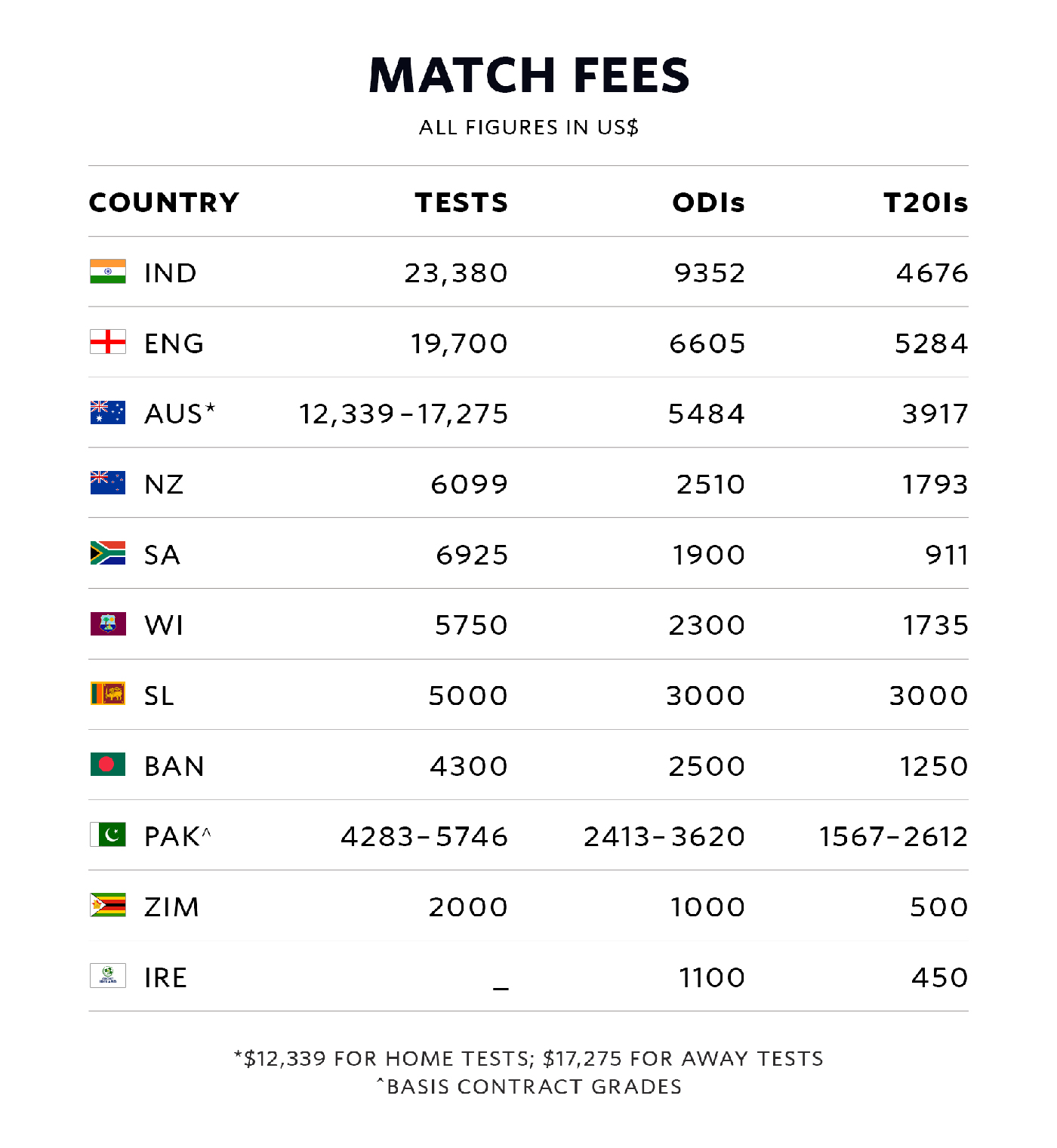
To some degree the low retainer is compensated by a more generous match-fee structure that elevates them to a mid-ranking side in terms of pay. But Pakistani players will argue their plight is compounded by a lack of access to the richest domestic league in the sport, or an especially bountiful payout from the PCB's commercial rights.
The years of exile have played a part no doubt, as has India refusing to play them (that has also significantly reduced the true value of a broadcast deal reportedly worth $150 million over five years). The cost of running an excessively vast domestic calendar is another drain.

-------
Heath Streak???